
Prof. Roland Pomberger, Head of the Chair of Waste Treatment Technology and Waste Management at the Montanuniversität Leoben and “Austrian of the Year” (Research category), discusses mechanical waste processing - from varying material streams and increasing demands of the circular economy to collaboration between research and industry.
What challenges do you currently see in mechanical waste processing, particularly in the screening and separation of ferrous and non-ferrous metals?
Roland Pomberger: Fundamentally, mechanical processing is an essential prerequisite for subsequent recycling processes—and that will not change in the future.
Even in the context of new digital technologies, it remains a crucial step in making material streams separable in the first place. One of the biggest challenges lies in the highly variable material composition: heterogeneous waste with widely fluctuating properties places high demands on the design and operation of machines and systems.
In the waste sector, the bottom line is this: anything that is possible can also be present in the input stream. This necessitates the ability to adjust machines very precisely and flexibly to different material characteristics.
Key areas include crushing and screening. Screening, in particular, has a significant impact on the plant’s overall performance. Differences in efficiency, throughput, and separation efficiency directly affect the quality of subsequent process steps.
The reliable separation of ferrous and non-ferrous metals is also essential, as even small residual amounts can significantly disrupt subsequent processes. High separation efficiency is required here.
This is why efficiency in mechanical processing is so important. This is also where differences in manufacturer quality become apparent. The machines must process thousands of tons reliably and with minimal maintenance over decades.
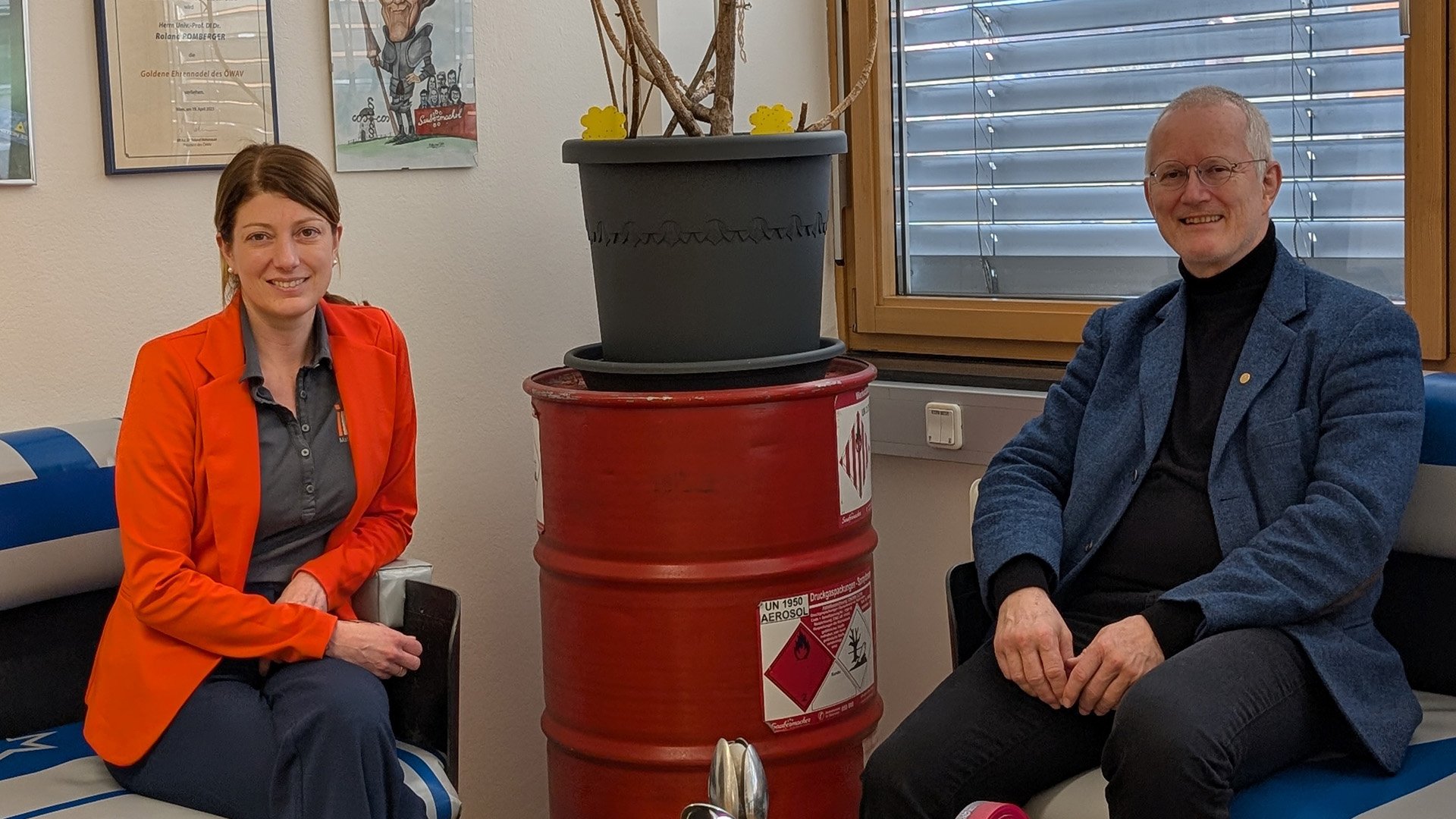
What are the greatest opportunities for optimization in mechanical waste sorting? How can sensors, monitoring, and related technologies contribute to this?
Roland Pomberger: Studies conducted by Prof. Thomas Pretz (RWTH Aachen) in the context of LVP sorting show that plants operate within the optimal operating range only about 30 % of the time. The rest of the time is spent dealing with overfeeding or underfeeding, or with downtime, which negatively impacts the entire process. Studies - including those from the ReWaste F research project - confirm a key finding: a material flow that is as consistent as possible is crucial for plant performance.
By utilizing reliable data and monitoring, as well as crushing, screening, and intermediate hoppers, the material flow can be made more uniform. This allows individual machines to operate closer to their optimal operating point, and throughput can be increased by up to 20 %.
In maintenance as well, sensor technology and the corresponding analyses can significantly boost the efficiency of such plants and, above all, prevent unexpected breakdowns.
How are increasing demands on the circular economy influencing processing technology?
Roland Pomberger: As demands on the circular economy rise, expectations regarding recovery rates and process reliability are increasing in particular.
Today, plants are designed much more specifically to meet defined performance metrics, and accordingly, the guarantees required by operators are also increasing. At the same time, practical experience shows that not every target can be achieved without technical limitations, which makes planning and design increasingly challenging and necessitates the careful selection of the right machine supplier.
Additional regulatory developments, such as the deposit system for beverage cans, are further altering material flows and increasing the pressure to remove residual metal content even more efficiently from mixed fractions. The selection of suitable machines and technologies thus becomes a decisive success factor for the economical operation of recycling plants.
Consequently, high-performance, flexible, and robust machine solutions—such as those developed by IFE Material Handling—play a key role.


In this context: When did you first come into contact with IFE’s material handling technology?
Roland Pomberger: I remember our first joint project in 2003. The central question was whether an IFE flat screen could be used for the first time in the processing of commercial waste.
It became clear that flat screens offer distinct advantages: They are versatile, as the screen panels can be easily replaced, and they perform well in operation due to their advantages in cleaning and handling blockages.
These characteristics have contributed significantly to the technology’s establishment in the years that followed and are now considered state-of-the-art in many applications.
Which of your current research focuses have a particularly tangible impact on the operation and further development of processing plants?
Roland Pomberger: Battery recycling has been a central topic for many years. A processing method developed here at the institute has already been put into practice, for example as part of a project at Redux Recycling GmbH, where facilities for sorting portable batteries are being operated and further expanded near Frankfurt.
The issue of fire risk in waste management is also of great practical importance. Batteries are one of the main causes here. While a few years ago, 1,000 kg of residual waste contained about 20 batteries, including roughly two lithium batteries, significantly higher quantities are expected today. This trend places new demands on machine operation and design.
How can collaboration between academia and industry be structured to promote innovation?
Roland Pomberger: Effective collaboration is based on both sides contributing their respective strengths: science with methodological depth and analytical understanding, and industry with practical relevance and practical applications. It is crucial that research questions are defined jointly and further developed in the spirit of applied research. At the same time, companies benefit from gaining early access to new findings. Such collaborations are usually long-term, as process developments often take several years.
The Montanuniversität Leoben and IFE are linked by such a long-standing partnership based on trusting cooperation. It is precisely this continuous collaboration between research and practice that proves to be a key success factor for innovation.